
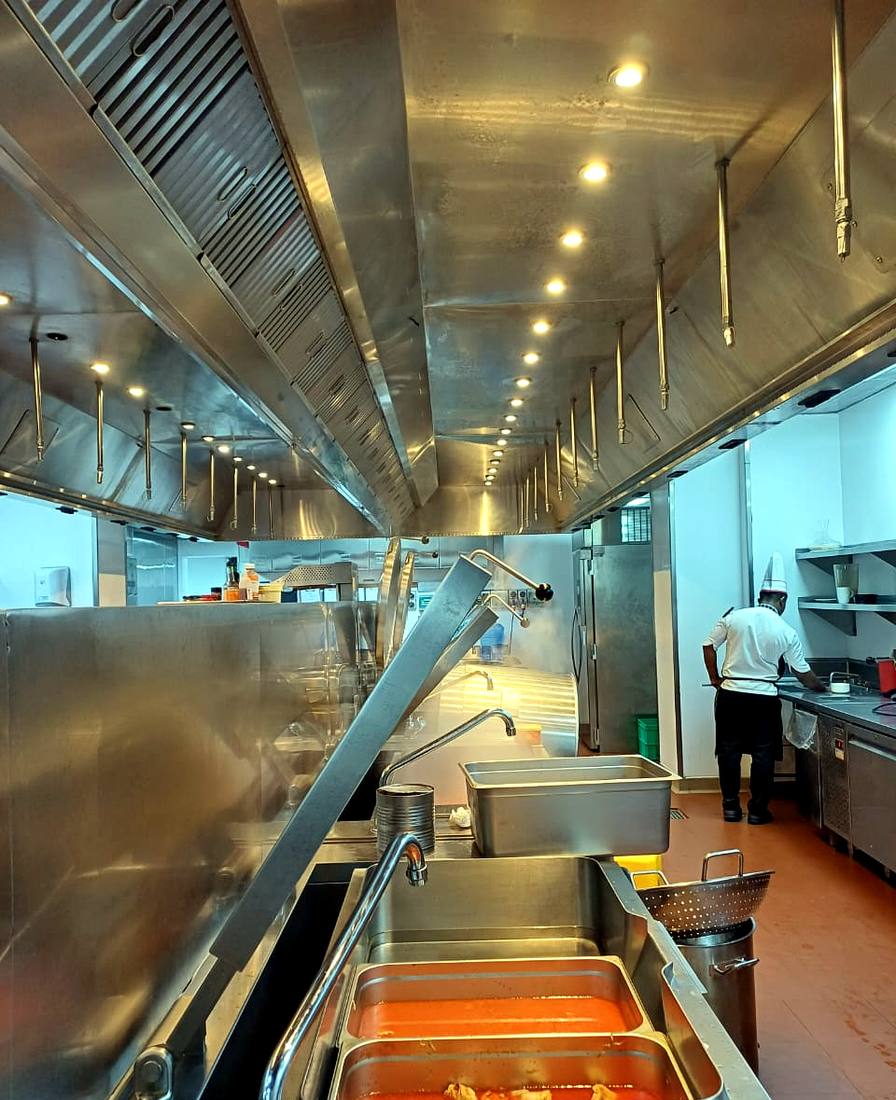
Exhaust systems rarely fail overnight. They get a little worse every week, and because the kitchen team is busy, nobody notices until the place is hot, smoky and no one can remember when it last felt comfortable.
These are the signs we tell our clients to watch for. If you spot two or three of them, it is worth getting the system checked.
1. Smoke is escaping around the edges of the hood
When the hood is working properly, smoke from the range should go straight up into it. If you see it drifting out from the sides or front, the system is not pulling enough air. Clogged filters are the most common reason, but a slipping fan belt or a partly blocked duct can do the same.
2. The kitchen feels hotter than it used to
Your exhaust removes heat as well as smoke. A kitchen that has become noticeably hotter, with no new equipment added, often means airflow has dropped. Your staff will usually feel this before anyone else does, so listen to them.
3. Grease is dripping from the hood
Grease should collect in the filters and drain into the collection channel. Drips on the cooking range or down the wall point to overloaded filters, a full grease cup, or leaking joints in the hood. This is a hygiene problem and a fire risk, so do not leave it.
4. The fan is louder, or making new noises
Rattling, squealing or a steady hum that was not there before usually means something mechanical is wearing out: bearings, belts, or a fan that has gone out of balance because of grease build-up on the blades. Catching it early is far cheaper than replacing a burnt-out motor.
5. Cooking smells are reaching the dining area
A little aroma near an open kitchen is fine. But if your guests are leaving with their clothes smelling of the tandoor, the system is not keeping up. In many restaurants this is also tied to how fresh air is being supplied back into the kitchen, which is something we check during a service visit.
6. Your electricity bill has crept up
A fan struggling against blocked filters or a dirty duct works harder and draws more power for less result. If your bills are rising and nothing else has changed, the exhaust is worth a look.
7. You cannot remember the last time the ducts were cleaned
Filters catch most of the grease, but not all of it. Over months, a layer builds up inside the ductwork. This is out of sight, which is exactly why it gets ignored, and it is one of the main fuel sources in kitchen fires.
A simple routine that helps: wash the baffle filters every few days in a heavy-use kitchen, empty the grease cup weekly, and have the fan and ductwork inspected at regular intervals. How often depends on how much frying and grilling you do, and we can help you work out a schedule that suits your kitchen.
If any of this sounds familiar, get in touch or message us on WhatsApp. We will tell you honestly whether you need a repair, a clean, or just a change to your cleaning routine.
More from the blog